A Coaching Framework to Improve Estate Agency Team Performance
Performance in estate agency teams improves when leaders coach alignment, not just output. This article introduces a mentoring approach using the McKinsey 7S Framework to develop emotional intelligence, clarity, and stronger performance from the inside out.

When teams underperform, the instinctive response is often corrective. Targets are revisited, expectations are reinforced, and activity levels are scrutinised. While these responses may address symptoms, they rarely resolve underlying causes. Performance is shaped by how people think, communicate, prioritise, and make decisions under pressure. Coaching becomes effective when it helps leaders understand why behaviours exist, not simply what needs to change.
This is where a structured internal lens becomes invaluable.
The McKinsey 7S Framework, developed by consultants at McKinsey & Company, provides a way to examine how organisations truly operate by looking at seven interconnected elements that influence behaviour and outcomes. Rather than treating performance as a single issue, the framework encourages leaders to explore alignment across the business.
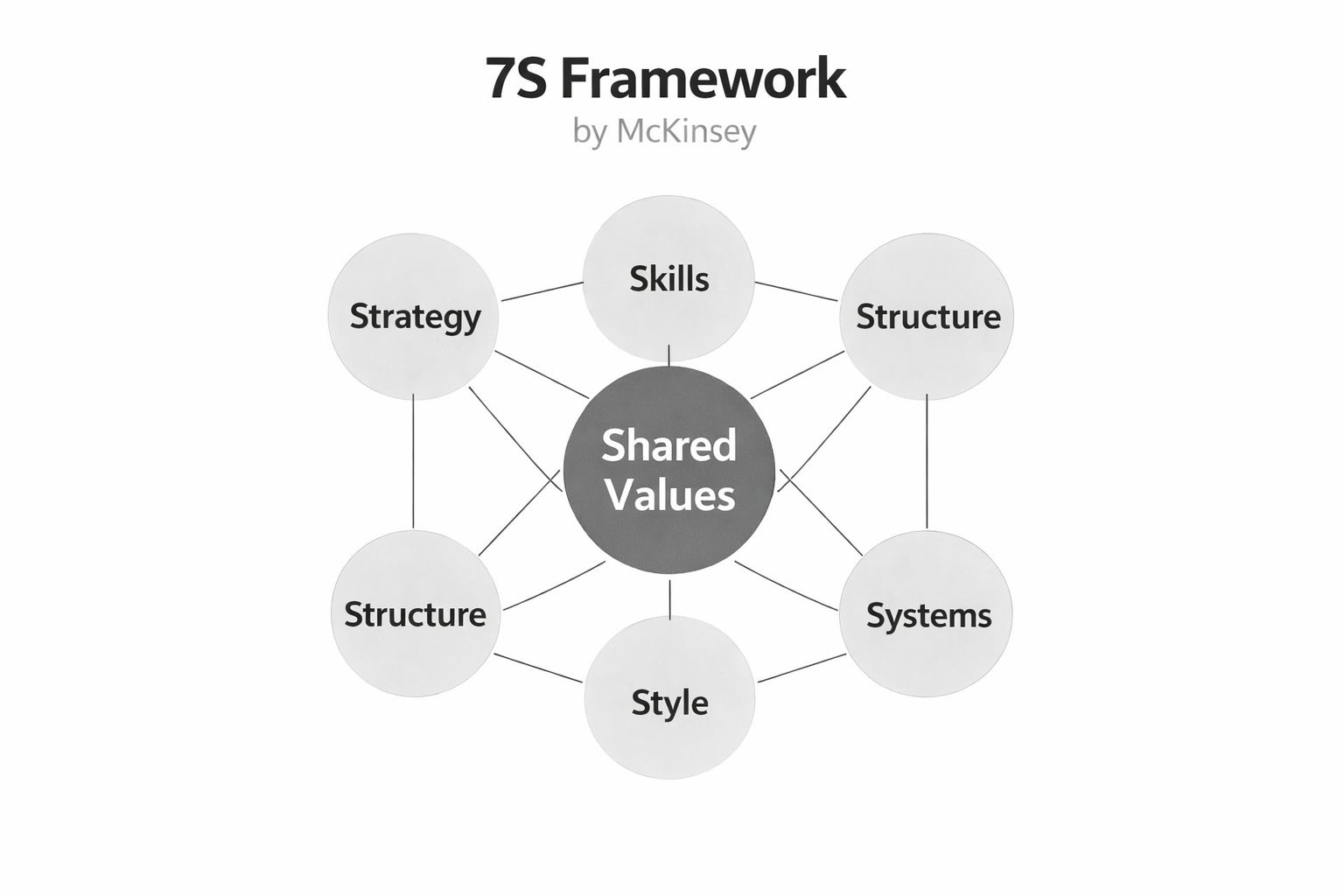
The seven elements are:
Strategy
Structure
Systems
Shared values
Style
Staff
Skills
What matters is not each element in isolation, but how well they reinforce one another.
Strategy defines where the business is heading and what it is prioritising. Structure clarifies responsibility and accountability. Systems govern how work actually gets done day to day.
These elements are visible and often well managed in estate agencies. However, focusing exclusively on them can create the illusion of control while deeper issues remain unaddressed.
Hard elements tell people what to do. They do not explain how people feel while doing it.
Shared values represent what the business truly believes, not what is written down. Style reflects how leadership behaves when pressure is applied. Staff and skills determine not only capability, but confidence and emotional intelligence. These softer elements influence how people respond to change, how safe they feel to speak up, and how ownership is taken. From a coaching perspective, this is where the most meaningful conversations happen.
Rather than using the 7S Framework as an audit checklist, leaders can use it as a mentoring tool by asking reflective, open questions.
- Which of the seven elements currently receives the most attention in our business?
- Which ones receive the least?
- Where do we see friction between intention and behaviour?
- What assumptions about how work should be done have not been challenged recently?
- What are we holding onto that may no longer be necessary?
These questions encourage awareness rather than defensiveness, helping teams think critically about how they operate rather than waiting to be instructed.
One of the most powerful outcomes of this approach is the permission it gives people to let go.
Let go of outdated responsibilities.
Let go of processes that exist purely because they always have.
Let go of the belief that improvement only comes from doing more.
Clearing the cupboard creates space. Space for better conversations, clearer priorities, and more intentional ways of working. This is where development shifts from compliance to commitment.
Coaching through alignment develops emotional intelligence because it requires leaders and teams to reflect on behaviour, impact, and intent. People become more aware of how they show up, how they influence others, and how their actions contribute to outcomes. Over time, this builds maturity, accountability, and resilience, which are essential in a people-driven industry like estate agency.
Use the McKinsey 7S Framework in your next leadership or team discussion to identify one area of misalignment and agree on a single change that encourages a more effective way of working.
Performance improves when alignment replaces assumption.
And alignment always starts inside the business.