Which Side of Estate Agency Are You Really On
Estate agency is splitting in two. One side is still polishing the old model and hoping it lasts. The other is rethinking how the business works, how revenue is created, and how technology, data, and people combine to build something far more efficient, valuable, and future ready.
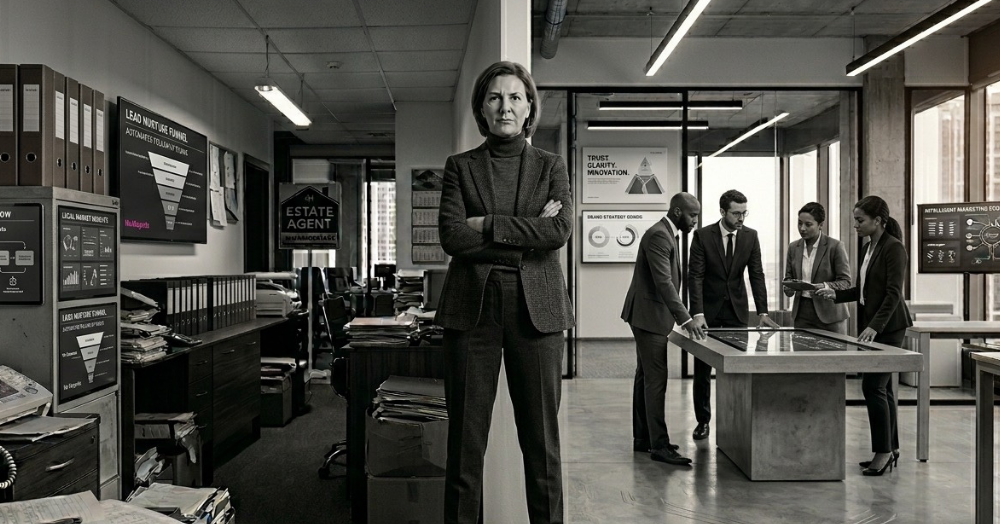
There are still plenty of agency owners standing in the same rooms, listening to the same conversations, and convincing themselves that a slightly updated version of the old way will be enough. A new bit of marketing here, a new system there, a bit of AI on top, and somehow the business will feel modern. The problem is that surface change is not the same as structural change, and many agencies are mistaking movement for progress.
That is the divide. One side is still trying to make the traditional model work harder. The other has realised the model itself needs questioning.
For years, the industry has defaulted to the same answers. If work increases, add more staff. If admin builds up, hire support. If the process gets heavier, create another layer to hold it together. It is a familiar formula, and it has been repeated so often that many owners no longer challenge it. They just assume this is what growth looks like. More people, more cost, more management, and more complexity dressed up as success.
The agencies moving properly forward are proving something else. Growth does not always need more branches, more bodies, or more weight in the structure. In fact, some of the strongest businesses we have seen have increased revenue significantly without building bloated teams around them. That does not happen by accident. It happens because they stop asking how to do more of what they have always done and start asking how the business should actually work now.
That is where thinking changes everything. A business designed for the next era does not throw people at problems that should be solved by better systems. It does not accept repetitive admin as a permanent feature of growth. It does not keep low value tasks in the hands of capable people and call that normal. It looks at workflow, automation, client journey, lead handling, reporting, follow up, and data use, and asks where friction is being tolerated simply because it has always existed.
This is also why so much AI adoption will disappoint people. Not because AI lacks potential, but because many businesses are trying to use it without changing the model around it. They have one tool doing one thing, another tool doing something else, and none of it is truly connected. The data is fragmented. The workflows remain clumsy. The team still works in the old rhythm. Leadership still measures the old way. Then people wonder why the results feel underwhelming.
AI layered onto poor design does not create a better business. It just gives an outdated one more moving parts.
The more important shift is not technological. It is mental. It is the willingness to stop protecting old assumptions. Employing more people to maintain inefficient processes is not always growth. Sometimes it is avoidance. It avoids the harder questions about redesign, integration, capability, and whether the business is actually preparing for the future or simply preserving the past. It also creates a ceiling. As revenue rises, margin gets spread across more administrative weight, while the people already in the business do not necessarily feel the benefit of growth in any meaningful way.
The agencies building something stronger are taking a different route. They are using technology with intent. They are treating data as an asset, not a byproduct. They are training their teams to think differently, not just work faster. They are improving revenue per employee because they are removing drag from the system, not because they are squeezing more life out of old methods. That is not a small tweak. That is a different philosophy of business.
So this is not really a question about whether you are open to change. Most people will say they are. The real question is whether you are still standing with the part of the industry trying to preserve the familiar, or whether you are willing to build in a way that makes some of the old logic obsolete.
Because the old ship does not stay afloat just because everyone is still standing on it.