
We Talk About Leadership, But What About Followership?
We spend a lot of time thinking about how to lead. What happens when we look at how people follow? This article explores why some people speak up, others wait for direction and what leaders can do to help their teams take more ownership.
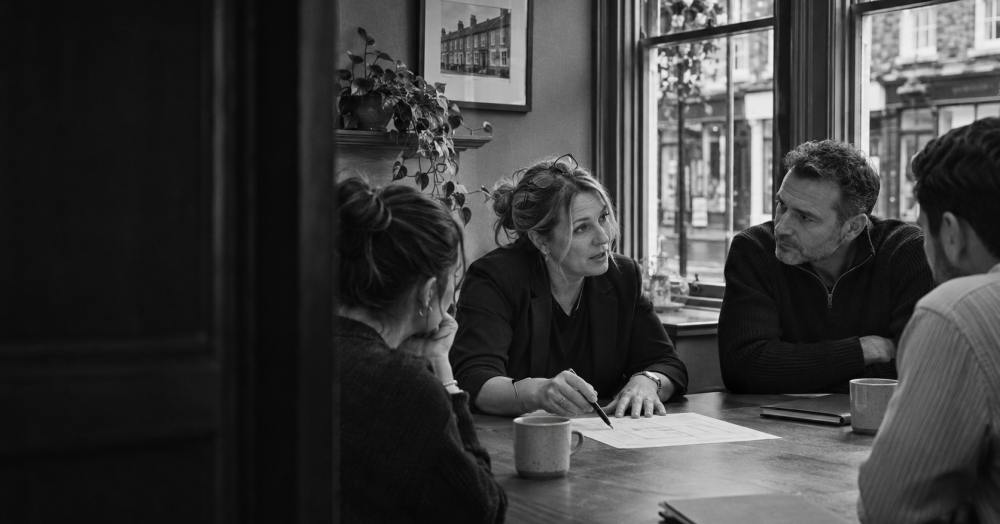
You’ve blocked out Tuesday morning to work on the business. By 9.30am, someone’s at your door asking whether they should call a seller. The buyer’s solicitor has raised a query, there’s still no answer and the seller is expecting an update.
“What would you do?” you ask.
“I’d call them now,” your colleague says. “I wanted to check with you first.”
It’s easy to hear that and think your team needs to take more ownership. Then you remember last week. The same person made a similar call and you took it over. From where they’re sitting, checking with you first makes sense.
Sometimes the behaviour that frustrates you is the behaviour people have learnt works best around you. They bring you a decision, you make it, and both of you get a little more used to that being your role. Over time, the owner who wants a more autonomous team becomes the person everyone waits for.
What followership actually means
Leadership is how we influence the direction people take. Followership is how people respond to that influence and what they contribute in return. They might use their judgement to carry out a decision, question an assumption or bring expertise that changes what the team does next.
The roles can change in one conversation. Say you decide every seller should get a Friday update. Your sales progressor points out that three clients need answers by Wednesday. She suggests giving each sale a named owner and timing each call around the decision the seller is waiting to make. You ask her to run the trial and take her advice on how to organise it. You led on the standard. She led on how to meet it. Both of you followed at some point.
A 2026 review by researchers Mary Uhl-Bien, Melissa Carsten and Toby Newstead found that nearly half the papers presented as followership research were better described as studies of leadership or general employee behaviour. That distinction is useful in your agency. Making a scheduled call tells you someone has done their job. What happens when they see a better way of handling those calls tells you something about followership. Watch what happens when the person with the best information has less authority than the person making the decision.
Five styles of followership and what you might see
Robert Kelley’s model considers how independently people think and how actively they contribute. Here’s how each style might show up when you change the way your agency updates sellers.
Alienated
They spot where the plan could go wrong and can explain it to a colleague, but they’ve stopped raising concerns with you. Perhaps they’ve offered ideas before and seen them go nowhere.
Pragmatic
They do what’s needed and wait to see whether the change sticks before putting more into it. They may have seen previous initiatives disappear as soon as the office got busy.
Passive
They wait for their manager to tell them which sellers to call, when to call and what to say. When something falls outside the process, the decision comes back to you.
Conformist
They put real effort into following the plan. If the schedule says Friday, they call on Friday, even when a seller needs an answer on Wednesday.
Exemplary
They take responsibility for the updates, raise problems early and suggest practical fixes. They stay involved and help make the change work.
Think about who gets thanked in your business. The conformist can make a meeting feel easy. The exemplary follower may make it harder by asking a question you hadn’t considered. Which response do you encourage when you’re short on time and want a decision made?
Five levels of engagement and what you might see
Barbara Kellerman asks a different question. How invested is someone in what happens? A colleague can disagree with your plan and still be one of the people most invested in the outcome. Watch what they do after the meeting as well as what they say in it.
Isolate
They’re detached from the change and take no active part. They may know little about what the team is trying to achieve.
Bystander
They understand what you’re trying to do and watch how it plays out. They can tell you how others are reacting while staying on the sidelines themselves.
Participant
They put some time or effort into supporting or challenging the change. They might trial the process with a few clients and need a clearer role or more support to take it further.
Activist
They put considerable effort into shaping the outcome. They might help colleagues adopt the change or gather support for a different approach.
Diehard
They’re deeply committed to supporting or opposing the leader or the direction. They’re prepared to stand by their position even when it comes at a personal cost.
How many people in your business would you put in each group? Pick one recent change. Estimate the percentage of people in each of Kelley’s styles, then do the same separately for Kellerman’s levels. If three people in a team of ten watched from the sidelines, that’s 30%. What did you actually see? Did they have the information, time and authority to get involved? What would they say if you asked them?
Treat it as a snapshot of that change. The person who waits for direction on a new sales process might be the first to take charge when a tenancy runs into trouble. What changes when they know the work well and trust that you’ll back their judgement?
What shapes how someone follows?
Start with self-identity. One person thinks being a good colleague means doing exactly what they agreed. Another thinks it means speaking up when they can see the plan will cause a problem. Both may care deeply about the team. When you ask them to take ownership, they may hear two different things. Give them an example of a decision you expect them to make and explain what you’d want them to do if they disagreed with you.
Personality can influence how people contribute to a team. The HEXACO model, developed by psychologists Kibeom Lee and Michael Ashton, describes six broad personality traits. The name comes from the six dimensions, with X taken from exraversion. Each trait sits on a scale, so think of them as tendencies that help you understand someone’s behaviour in a particular situation.
H — Honesty and humility
How someone approaches fairness, sincerity and status. You might see it in the person who gives a colleague credit for an idea, even when they could easily claim it themselves.
E — Emotionality
How someone experiences worry, responds to uncertainty and seeks support. When a sale gets complicated, one colleague may want to talk through what could go wrong. That conversation can bring a risk to light that the rest of the team has missed.
X — Extraversion
How comfortable and energised someone feels in social situations. One person might work through an idea aloud in the Monday meeting. Another might prefer to think it through and bring you a suggestion the next morning.
A — Agreeableness
How someone handles frustration and disagreement. It can show up in how patiently they hear out a colleague or how readily they compromise when the team has two different ideas about what to do.
C — Conscientiousness
How someone approaches organisation, care and follow-through. In an agency, it might show up in the person who checks what was promised, makes the call and records the next step so the rest of the team can pick it up.
O — Openness to experience
How curious someone is about new ideas and different ways of working. A colleague might be the first to ask whether there’s a better way to update sellers and offer to try it on a few live sales.
For a leader, the question is whose contribution does the way you run your business make easiest to see? If you only ask for ideas in a busy Monday meeting, you’ll hear most from the people comfortable thinking aloud. Give the team time to reflect and another way to respond. You might hear from the person who spotted the problem on day one and had been waiting for the right moment to tell you.
What does the person need from work?
Maslow’s hierarchy of needs suggests that motivation can reflect needs ranging from rest and security through to belonging, feeling respected and fulfilling your potential. Someone worried about how much they’ll earn next month may hear a proposed change to commission very differently from a colleague who sees it as a chance to progress.
Clayton Alderfer’s ERG theory groups human needs into existence, relatedness and growth. Its practical value is that several needs can matter to the same person at the same time.
Existence
The things that give someone a sense of security and make work sustainable. In an agency, that could mean predictable pay, workable hours or a manageable workload.
Relatedness
The relationships that help someone feel part of the team. Can they talk honestly to their manager? Do colleagues take their views seriously?
Growth
The chance to develop, use their judgement and take on responsibility that matters to them. That might mean leading their first appraisal or improving a process they’ve worked with for years.
A negotiator can want a steadier income, a voice in how the branch works and the chance to develop their skills, all in the same month. Ask which of those feels out of reach. The answer could explain why something you see as an opportunity feels different to them.
Does the person believe their effort will lead somewhere?
Victor Vroom’s expectancy theory explains motivation through what people expect will happen if they put in the effort. People weigh up whether their effort can improve their performance, whether that performance will lead to an outcome and whether they value that outcome.
Effort to performance
If I put the work in, can I get better at this? A negotiator who’s never handled a difficult fee conversation may need to observe a colleague, practise and get feedback before they feel ready to lead an appraisal.
Performance to reward
If I do it well, will I get the opportunity we discussed? If you’ve promised more responsibility once they’re ready, agree what they need to demonstrate and when you’ll review it. They’ll remember what happened the last time progression was promised.
Reward to personal goals
Is that an outcome I value? One person might want the extra pay. Another might value the chance to lead a project, develop a skill or have more control over their diary.
When someone’s effort drops, work out which link is weak. More encouragement may do little if they’re missing a skill, doubt you’ll follow through or care about a different outcome altogether.
What keeps people contributing after the bonus?
A bonus for booked appraisals can focus attention on getting more appointments in the diary. If you want better conversations at those appointments week after week, ask what the person finds satisfying about doing the work well. That’s intrinsic motivation. They might enjoy working out why a seller is hesitating and helping them make a decision they feel comfortable with.
Give them room to handle the conversation in their own words, feedback that helps them improve and a chance to see what their work meant to the client. That gives them a reason to keep developing the skill after the incentive has been paid.
We dedicate a full day to people performance on the Estate Agency X Business Accelerator. We look at how leadership works in practice and how you develop people with the confidence, judgement and authority to make good decisions themselves. That applies to the person handling a difficult sale, managing a tenancy or bringing a better idea to the weekly meeting.
Start with the next decision that comes back to your desk. Ask your colleague what they think should happen. If it’s a sound call, let them make it and agree when you’ll check in. The next time they face a similar decision, what will they have learnt from how you handled this one?